Call today! 704-536-6667
When calculating how much vinyl to wrap a car, even small miscalculations can lead to wasted material or unexpected costs. Whether you’re planning a full color change or a custom design, understanding real-world material usage is essential to getting it right the first time.
This guide from Sun Stoppers Window Tinting in Charlotte breaks down actual vinyl requirements by vehicle type, the factors that drive material usage up or down, cost expectations, and how to build a reliable estimate, based on real installation experience.
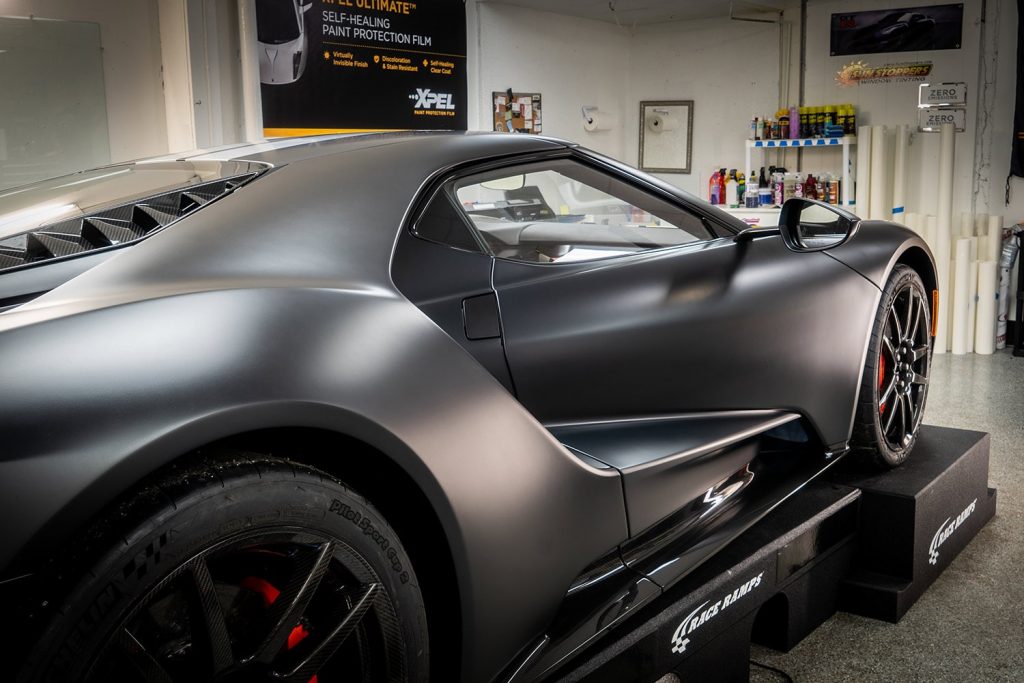
Vinyl wrap is sold in rolls, typically 60 inches (5 feet) wide, measured in linear feet. The total amount needed depends on vehicle size, panel complexity, and installation method – not just square footage.
| Vehicle Type | Typical Vinyl Needed | Real-World Notes |
|---|---|---|
| Micro Car | 25 to 30 ft | Minimal waste, simple panels |
| Compact / Mini | 40 to 50 ft | Tight curves may increase usage |
| Coupe / Hatchback | 50 to 65 ft | Sports cars need extra bumpers |
| Mid-Size Sedan | 55 to 70 ft | Most common wrap range |
| Full-Size Sedan | 65 to 80 ft | Larger panels mean more coverage |
| Small SUV | 65 to 85 ft | Roof height adds complexity |
| Large SUV / 4×4 | 80 to 100 ft | Boxy shapes require more overlap |
| Pickup Truck | 75 to 95 ft | Beds and edges increase waste |
| Van/Minivan | 90 to 110+ ft | Large flat panels but high surface area |
Real-world examples: A Tesla Model 3 typically uses 60 to 65 ft. A Ford F-150 extended cab may need 85 to 95 ft, depending on bed configuration and cab size.
Larger vehicles generally require more vinyl, but shape often has a bigger impact than size alone. Vehicles with sharp edges, deep contours, or aggressive curves, such as sports cars or modified builds, require extra material for stretching, repositioning, and proper adhesion.
One commonly overlooked detail is how much material complex areas like bumpers and corners consume. These sections often require multiple attempts to achieve a clean finish, which can increase total usage. In real installations, these factors can increase material needs by 10 to 20% compared to flatter vehicles.
| Coverage Type | Typical Vinyl Required |
|---|---|
| Full wrap (all exterior panels) | 55 to 110+ ft, depending on vehicle |
| Partial wrap (doors, hood, sides) | 25 to 50 ft |
| Accent wrap (roof, hood, mirrors) | 10 to 25 ft |
| Single panel (hood or roof only) | 8 to 15 ft |
Partial coverage is an effective way to achieve a custom look while significantly reducing material cost.
This is one of the most important and most overlooked factors in both material performance and installation difficulty.
| Property | Cast Vinyl | Calendered Vinyl |
|---|---|---|
| Thickness | 2 to 2.5 mil | 3 to 4 mil |
| Conformability | Excellent, stretches around curves | Limited, may lift on complex shapes |
| Durability | 3 to 5 years | 1 to 3 years |
| Repositionability | High | Low |
| Best for | Full vehicle wraps | Flat surfaces, short-term use |
| Cost | Higher | Lower |
For full vehicle wraps, cast vinyl is the professional standard. Its thinner profile and superior conformability allow it to stretch around bumpers, mirrors, and door handles without lifting or creating stress points. Films with built-in air-release channels allow installers to reposition panels without trapping bubbles, directly reducing material waste during installation.
Calendered vinyl is stiffer and will resist conforming on curved surfaces, increasing the likelihood of lifting edges and rework, which increases total material consumption.
Even with accurate estimates, the vinyl wrapping installation technique determines real-world material usage:
Professional installers pre-plan cut patterns to maximize yield from each roll, reducing waste compared to unplanned cutting.
Simple color wraps are the most efficient. However, custom designs can increase material requirements due to:
More complex wraps often require additional vinyl to ensure proper alignment and visual consistency, especially across large or highly visible panels.
DIY installs consistently use more material than professional installs – not because of poor planning, but because repositioning, rework, and trial-and-error consume excess vinyl that experienced installers avoid. Expect to add 15 to 25% extra buffer for DIY projects.
Understanding film finish helps set realistic expectations for both appearance and installation difficulty.
| Finish Type | Look | Handling Notes |
|---|---|---|
| Gloss | Mirror-like shine | Easiest to install, most forgiving |
| Matte | Flat, non-reflective | Shows installation errors more readily |
| Satin | Between gloss and matte | Popular for luxury vehicles |
| Carbon fiber | Textured, 3D appearance | Pattern matching required |
| Chrome/mirror | High-impact reflective | Most difficult to install, highest waste |
| Color-shift / chameleon | Changes hue with viewing angle | Requires careful directional alignment |
| Textured (brushed metal, etc.) | Directional grain | Grain direction must align across panels |
Chrome and color-shift films require the most excess material due to the precision needed for directional consistency and the difficulty of rework on misaligned sections.
Material quantity is one cost variable – film type, finish, and labor are the others.
| Cost Component | Typical Range |
|---|---|
| Material only (standard cast film) | $600 to $1,200 |
| Material only (premium/specialty film) | $1,200 to $2,500+ |
| Professional installation (full wrap) | $2,500 to $5,500+ |
| DIY total cost (material + tools) | $700 to $1,800 |
Premium finishes such as matte, satin, chrome, and color-shift cost more per linear foot and require more careful handling. First-time DIY setups should also budget $100 to $300 for tools: heat gun, felt squeegees, slip solution, cutting tape, and knifeless tape.
| Factor | DIY | Professional |
|---|---|---|
| Material waste buffer needed | 15 to 25% | 10 to 15% |
| Installation time | 2 to 5 days | 1 to 2 days |
| Risk of bubbles / lifting edges | Higher | Lower |
| Finish consistency | Variable | Consistent |
| Film warranty validity | May be voided | Maintained |
DIY wrapping is achievable, but the learning curve is steep. The most common failure points are insufficient surface decontamination before installation, skipping post-heat on edges and recessed areas, and over-stretching film on compound curves, which causes premature lifting.
If going the DIY route, use a cast film with air-release channels to give yourself maximum repositionability and reduce wasted sections.
Follow this process for a reliable estimate:
Step 1: Identify your vehicle category from the table above and note the base footage range.
Step 2: Adjust upward for complexity:
Step 3: Add your buffer to the adjusted total.
Example: A mid-size sedan needs around 65 ft as a base. Add 20% for DIY installation, which brings it to about 78 ft. Round up and order 80 ft to be safe.
Step 4: Verify roll width. Most professional wrap films come in 60-inch-wide rolls. Some specialty films come in 54-inch rolls – adjust your calculations accordingly.
If you want a clean, consistent finish without the guesswork, working with professionals is the most efficient approach.
Ready to upgrade your vehicle’s look? Book a Custom Vinyl Wrap in Charlotte, NC with Sun Stoppers Window Tinting in Charlotte and get expert guidance tailored to your vehicle and design goals.
Most vehicles require between 55 and 100 linear feet of 60-inch-wide vinyl, depending on size, panel complexity, and film type. Compact cars fall toward the lower end; full-size SUVs and trucks toward the upper range.
For compact cars and small coupes, 50 feet may be sufficient, but it leaves very little margin for error. For anything larger than a compact, 50 feet is likely to run short. Always order extra.
Professionals typically add 10 to 15% to their base estimate. DIY installers should add 15 to 25% to account for repositioning, trimming, and rework. Having excess material is always more cost-effective than stopping mid-install to wait for a new roll.
Yes, but it requires proper tools, the right film type, thorough surface preparation, and patience. Mistakes on compound curves and recessed areas are the most common points of failure in DIY wraps. First-time installers should practice on flat panels before tackling bumpers or door handles.
Vinyl wrap provides moderate protection against surface contamination, UV fading, and light abrasion. It does not offer the same level of impact and scratch resistance as paint protection film (PPF). For maximum paint protection, PPF on high-impact zones combined with a color-change vinyl wrap is the most comprehensive approach.
Quality cast vinyl removed within its rated lifespan, from properly cured paint, should not damage the surface. Wrapping left beyond its rated lifespan or applied over poorly adhered paint can cause adhesive transfer or paint lifting during removal.